Archive note: Originally published on October 4, 2024. The author’s original discussion and tool references are preserved; this republication does not update or revalidate them.
Shift-Left Approach In Smart Contract Development
Introduction
Hi folks! Today, we’re diving into how the Shift-Left approach can improve security in the smart contract development cycle. How does the Shift-Left approach help us to catch the smart contract bugs or vulnerabilities before they become million-dollar problems?
Ready to shift your perspective on smart contract development and security? Let’s dive in!
Outline of This Article
- Understanding Shift-Left Approach
- The Smart Contract Development Lifecycle with Shift-Left
- Tools and Testing Methodologies Supporting Shift-Left in Smart Contracts Development
- Benefits of Shift-Left in Smart Contract Development
- Challenges and Considerations
- Conclusion
Understanding Shift-Left Approach

Photo by Brad on Unsplash
What is the Shift-Left approach?
The Shift-Left approach is a methodology in software development and security that emphasizes integrating testing, quality assurance, and security practices early in the development lifecycle.
As we understand it, it’s about moving these crucial processes “to the left” on the project timeline, which is why it’s called “Shift-Left”.
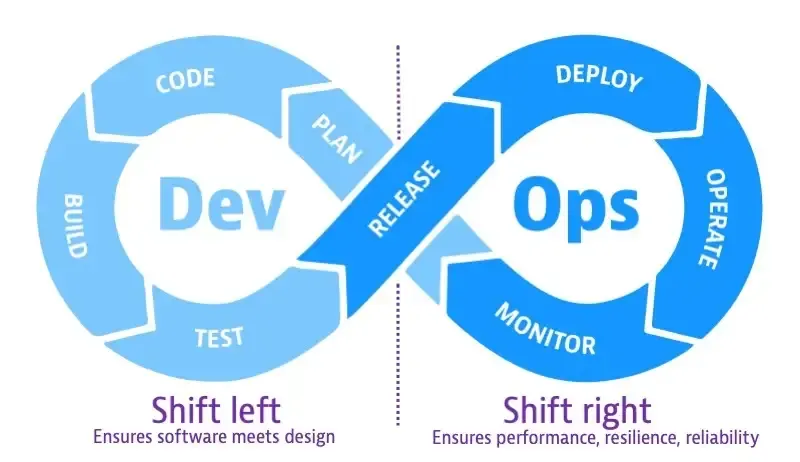
dynatrace.com | what is shift-left and what is shift-right
Traditionally, security testing and quality assurance were often done as the final steps before deployment. This approach could lead to costly fixes and delays when issues were discovered late in the process.
The Shift-Left approach changes this process by:
- Integrating security and quality checks from the very beginning of development
- Encouraging continuous testing throughout the project lifecycle.
- Improving collaboration between developers, security experts and QA teams from day one.
- Promoting a proactive rather than reactive approach to problem-solving.
This approach aligns well with agile development practices and the principles of DevSecOps. It’s not just about finding bugs earlier. It’s about cultivating a security-first mindset across the entire development team.
The Smart Contract Development Lifecycle with Shift-Left

Photo by Matthew Henry on Unsplash
In the realm of smart contract development, smart contracts are the backbone of trustless interactions. They are immutable by nature, which is both a strength and a weakness. On one hand, immutability ensures that the rules in the contract cannot be arbitrarily changed, providing a strong foundation for trust. On the other hand, it means developers are unable to fix or change the code if bugs or vulnerabilities are discovered after deployment. This dual nature of immutability raises the stakes significantly.
The Shift-Left approach addresses this challenge by integrating security practices early and throughout the development process. Let’s explore how this approach transforms each phase of the smart contract development lifecycle:
1. Design Phase:
- Engage security experts to review the design and architecture.
- List all the actors who can interact with smart contracts and define access rights for each function.
- Conduct threat modeling to identify potential vulnerabilities.
- Consider the security implications of contract interactions and system architecture.
2. Development Phase:
- Implement secure and best coding practices from the start.
- Utilize secure development frameworks and libraries. (eg. OpenZeppelin)
- Adhere to coding conventions for writing Solidity code.
- Use linters and static analysis tools continuously during development.
- Conduct regular code reviews with a security focus.
3. Testing Phase:
- Integrate security testing throughout the development process.
- Perform unit testing for every function to ensure individual components work as expected.
- Implement fuzz testing to identify unexpected vulnerabilities by inputting random data.
- Conduct formal verification testing to mathematically prove the correctness of critical contract properties.
- Execute integration testing on local environments or testnets to ensure proper interaction between contract components and external systems.
4. Auditing Phase:
- Prepare comprehensive documentation about the smart contract for external audits, including architecture, functionality, and known edge cases.
- Conduct thorough internal security reviews before engaging external auditors.
- Engage with a minimum of 1 or 2 external audit teams to ensure diverse perspectives.
- Document all audit findings, both before and after addressing identified issues.
- Implement and verify fixes for all identified vulnerabilities.
- Conduct a follow-up review to ensure all fixes are properly implemented and don’t introduce new issues.
5. Deployment Phase:
- Implement secure deployment practices, e.g., proper handling of the deployer account or use of multi-signature wallets for critical functions.
- Set up monitoring tools to track contract interactions and detect unusual activities.
- Have a clear incident response plan in place before deployment.
- Conduct final security checks and simulations on testnets before mainnet deployment.
- Plan a phased deployment strategy, starting with limited functionality or value to minimize potential risks as appropriate.
6. Maintenance Phase:
- Continuously monitor for new vulnerability type or attack vectors that may relate with our protocol.
- Establish a process for secure contract updates or upgrades if necessary.
- Regularly review and update security practices based on new threats and best practices.
- Conduct ongoing education for the development team on emerging security trends.
- Place the protocol on bug bounty platforms to incentivize external security research.
- Open communication channels with the user community for quick response to reported issues.
From these phases above, when we integrate security at every stage from the Shift-Left approach, we create a more robust and secure development lifecycle of smart contracts.
This proactive approach not only reduces the risk of vulnerabilities but also fosters a security-conscious or security-first culture within development teams. Ultimately, this results in more reliable and trustworthy smart contract applications.
Tools and Testing Methodologies Supporting Shift-Left in Smart Contracts Development

Photo by Kajetan Sumila on Unsplash
From this part, we will introduce the tools and methodologies that support early integration of security in smart contract development. These resources are crucial for implementing the Shift-Left approach effectively, enabling developers to identify and address potential vulnerabilities throughout the development lifecycle.
Development Frameworks
Choose the frameworks that provide integrated environments for writing, testing, simulating and deploying smart contracts. These tools below support the Shift-Left approach by enabling early and continuous testing throughout the development process.
- Foundry: A fast toolkit for Ethereum application development, written in Rust.
- Hardhat: A flexible JavaScript-based development environment that facilitates testing, debugging, and deploying.
- Remix IDE: An open-source tool that helps write Solidity contracts on the web browser.
Test-Driven Development (TDD)
As we know, the TDD is a development approach where tests are written before that actual code. When we apply the Left-Shift approach to smart contract development, TDD ensures that security considerations are built into the contract from the very beginning.
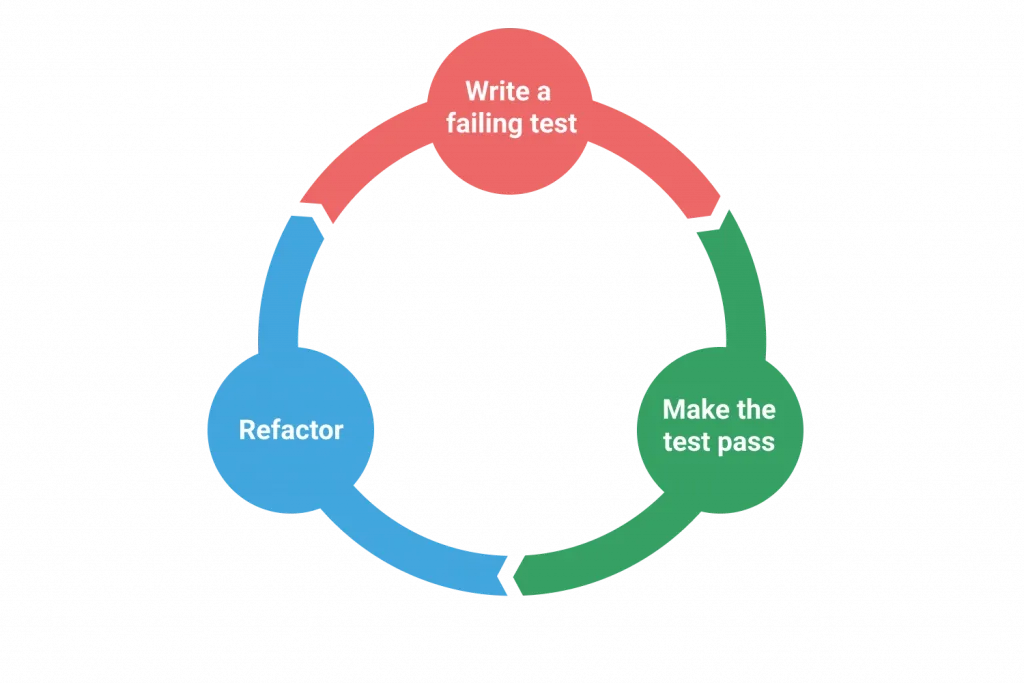
Red-Green-Refactor TDD cycle — tddmanifesto.com
The TDD process typically follows three phases:
- Red Phase: Write a failing test that defines the expected behavior and security properties of your smart contract. This phase forces developers to think about security requirements before writing any implementation code.
- Green Phase: Implement the minimal code necessary to pass these tests. This phase helps in creating focused, security-conscious code that meets the predefined requirements.
- Refactor Phase: Refactor the code while ensuring all tests continue to pass. This phase allows for code optimization and improvement without compromising the established security properties.
Continuous Integrating and Testing Tools
Continuous integration processes help us automate the running of tests and security checks whenever code changes are made or merged, supporting ongoing security validation throughout the smart contract development lifecycle. Key tools and strategies include:
Automated Testing Pipelines
- Jenkins or GitLab CI: These tools allow you to set up automated pipelines that trigger tests on every code commit or pull request.
Framework Testing
- Foundry and Forge: Provide fast, Solidity-specific testing capabilities, allowing developers to write and run tests in Solidity itself.
- Hardhat: Provide a flexible development environment with built-in testing functionality for Ethereum smart contracts.
Continuous Testing Strategies
- Setup the repository to automatically trigger tests when code is merged or pull requests are created.
- Utilize Foundry’s Forge watch mode to automatically run tests whenever changes are detected in your smart contract code.
- Implement strategies to only run tests affected by recent changes, speeding up the testing process.
Integrating Analysis Tool
- Static Analysis: Tools like Slither or MythX automatically check for common vulnerabilities and code quality issues without executing the code, enabling early detection of potential security flaws and consistent enforcement of coding standards.
- Dynamic Analysis: Tools such as Echidna or Manticore analyze code behavior during runtime with various inputs and states, uncovering complex vulnerabilities and verifying contract behavior under different scenarios that may not be apparent in static analysis.
- Fuzz Testing and Property-Based Testing: These techniques generate random or semi-random inputs to test contract properties and invariants, helping discover edge cases and vulnerabilities that might be missed in manual testing while automatically increasing test coverage.
- Gas Optimization: Gas analyzers like eth-gas-reporter monitor and optimize contract deployment and function call costs, helping identify gas-intensive operations early in the development process and optimize code for lower transaction costs.
Simulation and Mocking
- Using “cheat codes” in Foundry to simulate various blockchain conditions
- Mocking external contract interactions for comprehensive testing
Code Coverage and Quality Metrics
- Tools for measuring test coverage in smart contracts
- Integrating code quality metrics into the development process
By integrating these tools and strategies into your CI/CD pipeline, you can create a robust, automated testing and analysis workflow. This approach ensures that every code change is thoroughly tested and analyzed for potential security issues, performance problems, and adherence to best practices, all without manual intervention.
Benefits of Shift-Left in Smart Contract Development

Photo by Shane on Unsplash
As we’ve discussed earlier, when we apply the Shift-Left approach in smart contract development, we gain several significant advantages.
Early Detection of Vulnerabilities
Integrating security practices from the beginning allows teams to identify and address potential vulnerabilities much earlier in the development process. This proactive approach helps prevent critical issues from making their way into the final deployed contract, significantly reducing the risk of exploits.
Cost-Effectiveness of Early Bug Fixes
Fixing bugs and vulnerabilities early in the development cycle is considerably less expensive and time-consuming than addressing them post-deployment. In the blockchain world, where deployed contracts are immutable, the cost savings of early detection can be substantial, potentially saving millions in lost funds or complex migration processes.
Improved Overall Contract Quality and Reliability
By consistently applying security best practices and thorough testing throughout the development process, the overall quality and reliability of smart contracts are enhanced. This leads to more robust contracts that can better withstand various scenarios and potential attacks.
Faster Time-To-Market with Secure Contracts
While it might seem counterintuitive, integrating security practices early often leads to faster development cycles. By catching and fixing issues early, teams avoid time-consuming rework and lengthy audit processes later, allowing for quicker deployment of secure contracts.
Cultivating a Security-First Mindset Across The Entire Development Team
The Shift-Left approach fosters a culture where security is everyone’s responsibility, not just that of dedicated security experts. This mindset encourages developers to consider security implications in every decision, leading to more secure code by default and a team that’s more adept at creating robust smart contracts.
Challenges and Considerations

Photo by Alvaro Reyes on Unsplash
While the Shift-Left approach offers numerous benefits for smart contract development, it also comes with its own set of challenges and considerations.
Initial Time Investment
Implementing Shift-Left practices often requires more time upfront for planning, setting up tools, and training team members. This initial investment can be challenging for teams under tight deadlines or with limited resources.
Learning Curve
Adopting new methodologies and new tools requires a learning period for the development team. This can temporarily slow down development.
Balancing Security with Development Speed
There is some trade-off between thorough security practices and rapid development. Finding the right balance to maintain both security and agility can be challenging.
Resistance to Change
Some team members may resist changing if they perceive the new process as cumbersome or unnecessary.
Tool Integration and Maintenance
Integrating various security tools into the development pipeline and keeping updated can be complex and time-consuming. Ensuring compatibility between different tools and workflows adds another layer of complexity.
False Positives from Security Tools
Automated security tools can sometimes generate false positives, leading to alert fatigue. This can potentially cause developers to overlook real issues from numerous false alarms.
Handling Legacy Code
Applying Shift-Left approach to existing or legacy smart contracts can be challenging and may require significant refactoring.
Cost Considerations
While Shift-Left can lead to cost savings in the long run, the initial investment in tools, training, and process changes can be substantial.
Addressing these challenges demands commitment from both business stakeholders and development teams. It’s crucial to align business goals with the development process, educate non-technical stakeholders, and adjust project timelines and resources accordingly.
Conclusion
The Shift-Left approach in smart contract development integrates security early, offering benefits like early vulnerability detection and improved quality. Despite challenges, it’s crucial in blockchain, where code immutability is key.
Embracing this approach is essential for building trust, preventing exploits, and advancing blockchain technology. As we innovate, Shift-Left principles will remain fundamental to secure development.
Please stay tuned for our next article on blockchain security.
Until then, happy coding and stay secure!
Author Details
Anak Mirasing, Lead Blockchain Security Auditor and Consultant
About Valix Consulting

Valix Consulting is a blockchain and smart contract security firm offering a wide range of cybersecurity consulting services. Our specialists, combined with technical expertise, industry knowledge, and support staff, strive to deliver consistently superior quality services.
For any business inquiries, please contact us via Twitter, Facebook, or [email protected].